MIN Faculty
Facultyof Mathematics, Informatics
and Natural Sciences
and Natural Sciences
Photo: pixabay
24 April 2026, by Heiko Fuchs

Photo: UHH/MIN/Fuchs
On April 23, 2026, the nationwide Girls’Day and Boys’Day events took place once again. These events offer students the opportunity to explore careers and fields of study in which their gender has historically been underrepresented. At the Faculty of Mathematics, Computer Science, and Natural Sciences at the University of Hamburg, over 600 students from Hamburg and the surrounding area had registered to participate in the diverse range of activities.
The program covered an impressive range of topics—from microbiology lab work and experiments in nanotechnology and food science to climate research, earth sciences, and astrophysics.
The focus was particularly on interactive and creative formats: Participants developed their own app ideas, built and programmed LEGO robots, immersed themselves in virtual worlds, and took on the challenges of a science escape game. Others explored physical and chemical phenomena while cooking or engaged directly with researchers.
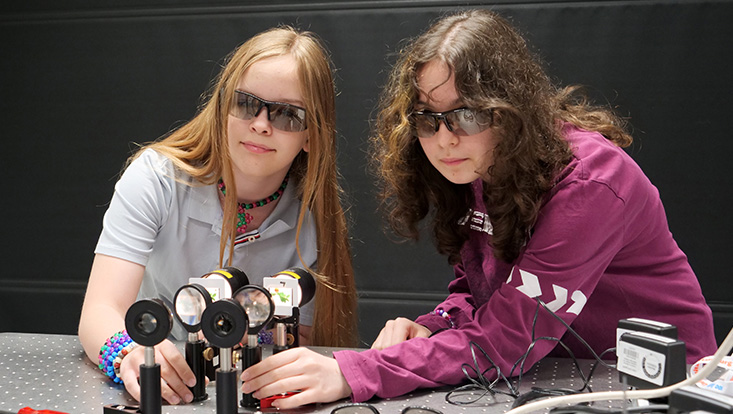
Photo: UHH/MIN/Fuchs
Girls'Day event: “Science Escape Game” by the “Light & Schools” School Lab
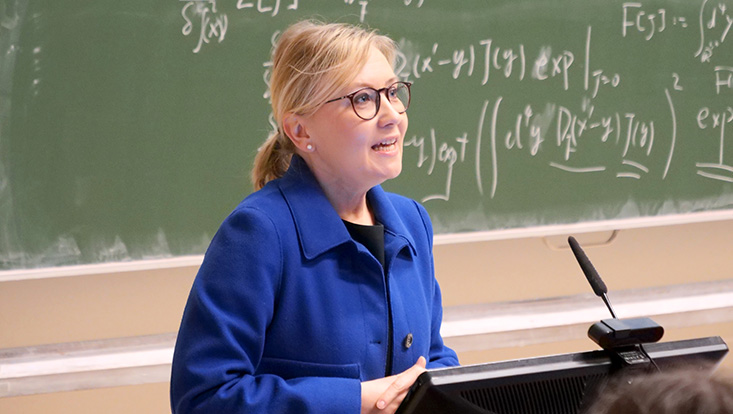
Photo: UHH/MIN/Fuchs
Prof. Dr. Natalia Filatkina, Vice President for Academic Affairs at the University of Hamburg, welcomes the participants

Photo: UHH/MIN/Latos
Girls'Day event: “A Glimpse into the Colorful World of Chemistry” at the “Molecules & Schools” Chemistry School Lab

Photo: UHH/MIN/Latos
Boys'Day event: “An Introduction to Food Chemistry” at the “Molecules & Schools” school chemistry lab

Photo: UHH/MIN/Fuchs
Girls'Day event: “The Physics and Chemistry of Cooking” in the Nanoscience Division of the Department of Physics

Photo: UHH/MIN/Latos
Girls'Day event: “Robot Construction and Programming with LEGO Robots” at the Department of Informatics
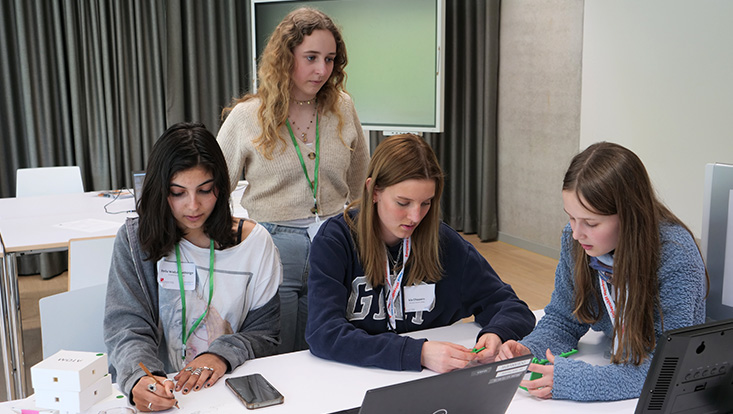
Photo: UHH/MIN/Fuchs
Girls'Day event: “Discover Research with Minicomputers” at the “Light & Schools” physics school lab

Photo: UHH/MIN/Grebe
Boys'Day event: “A Day in Geology” at the Department of Earth System Sciences

Photo: UHH/MIN/Grebe
Girls'Day event: “Mathematics: The Science of the Future” at the Department of Mathematics

Photo: UHH/MIN/Fuchs
Girls'Day event: “The Physics and Chemistry of Cooking” in the Nanoscience Division of the Department of Physics
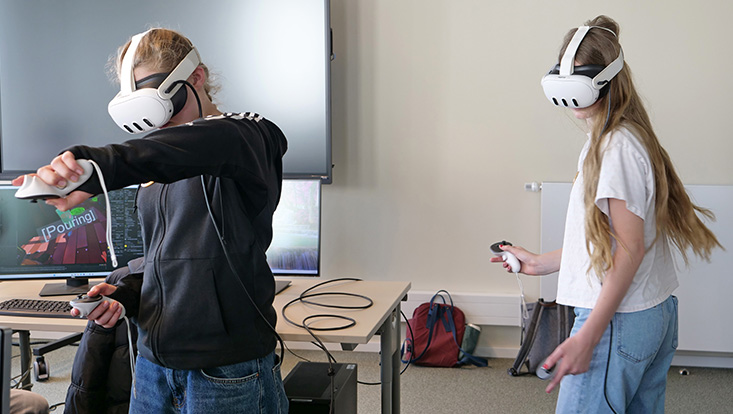
Photo: UHH/MIN/Latos
Girls'Day event: “Creating and Exploring Virtual Worlds” at the Department of Informatics

Photo: CUI-AIM
Boys'Day event: “Art Makes a Difference” by the “Light & Schools” school lab

Photo: UHH/MIN/Fuchs
Girls'Day event: “The Physics and Chemistry of Cooking” in the Nanoscience Division of the Department of Physics
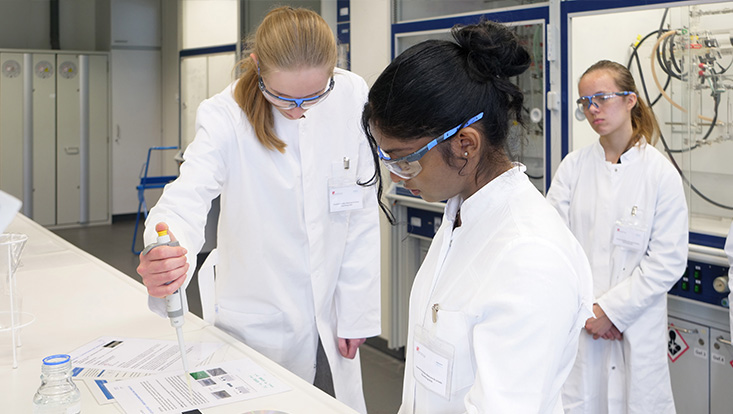
Photo: UHH/MIN/Latos
Girls'Day event: “A Glimpse into the Colorful World of Chemistry” at the “Molecules & Schools” Chemistry School Lab

Photo: UHH/MIN/Latos
Girls'Day event: “Creating and Exploring Virtual Worlds” at the Department of Informatics

Photo: CUI-AIM
Boys'Day event: “Art Makes a Difference” by the “Light & Schools” school lab

Photo: UHH/MIN/Latos
Girls'Day event: “Robot Construction and Programming with LEGO Robots” at the Department of Informatics

Photo: UHH/MIN/Latos
Girls'Day event: “A Glimpse into the Colorful World of Chemistry” at the “Molecules & Schools” Chemistry School Lab

Photo: UHH/MIN/Grebe
Boys'Day event: “A Day in Geology” at the Department of Earth System Sciences

Photo: UHH/MIN/Fuchs
Reception area for the Girls'Day event “The Physics and Chemistry of Cooking” at the Department of Physics
The goal of Girls’ Day and Boys’ Day is to challenge existing gender stereotypes and open up new perspectives for participants’ futures. Although the events take place on the same day, they are deliberately held separately for girls and boys: this creates safe spaces where participants can explore new possibilities more freely and overcome inhibitions. This approach provides targeted opportunities to spark interest and build self-confidence in previously unfamiliar fields.
Demand for Girls’Day and Boys’Day activities was very high again this year, with all events booking up within a very short time.
Here is an overview of the offerings from the individual departments of the Faculty of Mathematics, Computer Science, and Natural Sciences at the University of Hamburg:
Department of Biology
In the Boys’Day program “A Day as a Microbiologist,” participants took a closer look at the world of microorganisms and learned about their benefits. After a brief introduction, they worked hands-on in the lab and gained their first experience with pipetting and using a microscope.
Department of Chemistry
In the Department of Chemistry, participants gained diverse insights into current research fields as part of Girls’Day and Boys’Day. While the female students explored nanoscience and its significance for future technologies, the male students learned about issues in biochemistry and food chemistry. In the “Molecules & Schools” school lab of the “CUI: Advanced Imaging of Matter” Cluster of Excellence, they conducted experiments independently and discussed study and career prospects with researchers and students.
Department of Earth System Sciences
In the Department of Earth System Sciences, the students immersed themselves in geology and paleontology, identified rocks, and examined fossils. Meanwhile, the female students explored climate research at the Cluster of Excellence “Climate, Climatic Change, and Society”—covering topics ranging from ice ages and climate models to current issues in climate change. Both programs combined hands-on exercises with vivid insights into research fields and provided an opportunity to learn more about academic and career prospects.
Department of Informatics
In the Department of Computer Science, a total of five programs were held as part of Girls’ Day, which conveyed key topics of the digital world in a practical way. Participants developed their own digital ideas in a “Mini Design Sprint,” programmed games, and explored applications of the Internet of Things. They also engaged with cryptography in a playful way and gained initial insights into programming logic. In addition, they built and programmed LEGO robots and designed their own virtual 3D worlds, which they could then explore in virtual reality.
Department of Mathematics
In the Department of Mathematics, the Girls’ Day participants got a taste of daily life as a mathematics student, talked with female undergraduates and doctoral candidates, and attended lectures. The program was rounded out by practical insights into the real-world applications of mathematics and by working together to solve simple puzzles.
Department of Physics
At the Department of Physics, participants in Girls’ Day gained a wide range of insights into various fields of physics—from astrophysics to nanoscience. At the Hamburg Observatory, they explored the universe through hands-on exercises and observations and had the opportunity to talk with researchers. In addition, they worked with minicomputers in the “Light & Schools” school lab of the “CUI: Advanced Imaging of Matter” Cluster of Excellence, developed their own small projects, and learned the basics of programming. Interactive formats such as a science escape game conveyed current research in a playful way.
More than 390 female students signed up for the hands-on workshop “Physics and Chemistry of Cooking” led by Prof. Dr. Wolfgang Parak’s nanoscience research group—supported by the Clusters of Excellence CUI: Advanced Imaging of Matter and Quantum Universe—and explored scientific principles through everyday cooking processes. At various experimental stations, the participants investigated how a pressure cooker works, fermentation during baking, and the encapsulation of flavors.
As part of Boys’ Day, participants gained insights into science communication. In the “Art Helps” program offered by the “CUI: Advanced Imaging of Matter” Cluster of Excellence, they learned how complex research can be communicated in an understandable way through visual and artistic approaches.
For more information, visit the website of the Faculty of Mathematics, Informatics, and Natural Sciences:
uhh.de/min-girls-boys-day
For more information on all Girls’ Day and Boys’ Day events at the University of Hamburg:
www.uni-hamburg.de/chancengerechtigkeit/ueber-uns/veranstaltungen/girls-und-boys-day.html