
MIN Faculty
Facultyof Mathematics, Informatics
and Natural Sciences
and Natural Sciences
Photo: pixabay
8 June 2026, by MIN-Dekanat
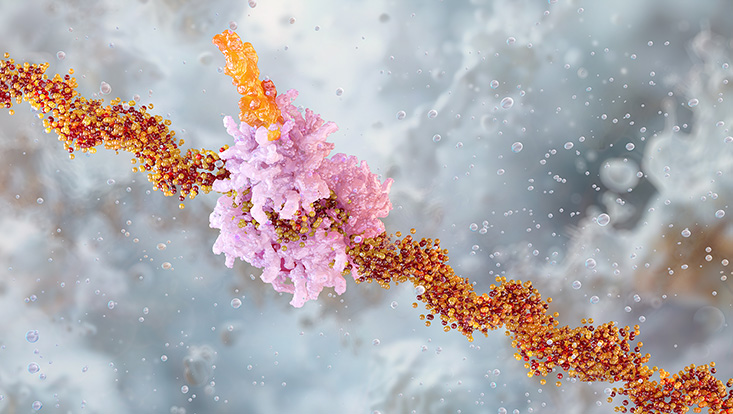
Photo: Adobe Stock
How do bacteria regulate the production of their proteins? Researchers at the University of Hamburg, in collaboration with international partners, have investigated this question. In the process, they were able to demonstrate how small protein building blocks, known as peptides, specifically influence bacterial protein production. The findings have now been published in the journal “Nature Communications”.
Proteins are the fundamental building blocks and tools of every cell. They are produced by ribosomes – tiny molecular factories. The international team research focused on a narrow channel within the ribosome. The newly formed protein exits the ribosome through this so-called nascent peptide exit tunnel. The researchers were able to show that interaction of peptides with this tunnel also serves as a key checkpoint that determines whether protein production continues or is halted.
Initially, the team investigated antimicrobial peptides capable of inhibiting bacterial growth by binding within the tunnel and blocking it. Using genomic databases, the researchers identified new members of this class of molecules. Although many of these peptides are very similar, even the slightest changes in their structure can cause them to block protein production in different ways.
The researchers then took a closer look at the peptide CliM, which is found in bacteria from the species Clostridia. A species that is related to imbalances of the microbiome in the gut. Unlike antimicrobial peptides, it does not kill bacteria. Instead, it serves as an internal warning signal. If important proteins are not properly incorporated into the cell membrane, CliM can temporarily halt protein production, thereby helping to regulate cellular homeostasis.
“Our findings show that the exit tunnel of the ribosome is much more than just a passageway for newly formed proteins. It plays a central role in regulating protein production,” says Daniel N. Wilson, a professor in the Department of Chemistry at the University of Hamburg and co-author of the two studies.
The researchers view these findings as a key foundation for understanding bacterial regulatory mechanisms. In the long term, these insights could also help in the development of new antibacterial agents that specifically target bacterial ribosomes.
„Unsere Ergebnisse zeigen, dass der Ausgangstunnel des Ribosoms weit mehr ist als ein einfacher Durchgang für neu gebildete Proteine. Er spielt eine zentrale Rolle bei der Steuerung der Proteinproduktion“, sagt Daniel N. Wilson, Professor am Fachbereich Chemie der Universität Hamburg und Mitautor der beiden Studien.
Die Forschenden sehen in den Ergebnissen eine wichtige Grundlage für das Verständnis bakterieller Regulationsmechanismen. Langfristig könnten die Erkenntnisse zudem dazu beitragen, neue antibakterielle Wirkstoffe zu entwickeln, die gezielt an den Ribosomen von Bakterien angreifen.
Weiping Huang, Max J. Berger, Haaris A. Safdari, Dorota Klepacki, Helge Paternoga, Chetana Baliga, Daniel N. Wilson, Nora Vázquez-Laslop & Alexander S. Mankin,
Flipping antimicrobial peptides in the exit tunnel of the bacterial ribosome,
Nature Communications volume 17, Article number: 4914 (2026).
DOI: 10.1038/s41467-026-74007-x
Mayu Yoshida, Felix Gersteuer, Ole Berendes, Keigo Fujiwara, Haaris A. Safdari, Helge Paternoga, Hiraku Takada, Nozomu Obana, Helmut Grubmüller, Lars V. Bock, Daniel N. Wilson and Shinobu Chiba,
Diverse mechanisms of translation arrest by a Clostridia ribosome stalling peptide CliM,
Nature Communications volume 17, Article number: 4202 (2026),

